


The history of Jordan unfolds at every turn. For thousands of years, the country has stood at the crossroads of great civilizations, each leaving behind remarkable traces that continue to shape its cultural identity today. From ancient Nabataean traders to Roman cities, Islamic heritage, and medieval Crusader castles, Jordan offers travelers a journey through some of the most fascinating chapters of human history.
Exploring Jordan is not only about visiting archaeological sites — it is about experiencing a living landscape where past and present coexist.
“ Jordan Through the Ages: Exploring the History of Jordan’s Great Civilizations”


History of Jordan: A Timeline of Civilizations
This overview follows the history of Jordan from its earliest settlements and kingdoms to the civilizations whose monuments travellers can still explore today.
The Earliest Civilizations of Jordan
Long before the rise of Petra or the Roman cities, the lands that form modern Jordan were home to some of the earliest civilizations in the Middle East. Archaeological discoveries show that human settlements in the region date back thousands of years, making Jordan an important part of the ancient world.
Among the earliest cultures were the Edomites, Moabites, and Ammonites, kingdoms mentioned in historical and biblical sources that flourished during the first millennium BCE. These societies built fortified cities, developed agricultural communities, and established trade networks across the region.
One of the most significant ancient sites is Umm ar-Rasas, which later became an important settlement during the Roman and Byzantine periods. Other locations such as Pella, Tall Hisban, and the ancient capital of the Ammonites, Rabbath Ammon (modern-day Amman), reveal layers of civilization stretching back thousands of years.
These early cultures laid the foundations for the civilizations that followed, shaping trade routes, settlement patterns, and cultural traditions that would influence the region for centuries.
The Nabataeans and the Legacy of Petra
Among the civilizations that shaped Jordan, the Nabataeans remain one of the most remarkable. This ancient Arab people established a powerful trading kingdom more than 2,000 years ago, controlling major caravan routes that connected Arabia, Egypt, and the Mediterranean world.
Their greatest achievement is the magnificent city of Petra, carved directly into rose-colored sandstone cliffs. Petra was once a thriving commercial hub where merchants exchanged spices, incense, silk, and precious goods.
Today, Petra stands as one of the most extraordinary archaeological sites in the world and a UNESCO World Heritage Site. Walking through the narrow Siq and emerging before the iconic Treasury offers visitors a glimpse into the ingenuity and artistry of the Nabataean civilization.
Roman Cities and Classical Architecture
Following the Nabataeans, the Roman Empire expanded into the region, transforming parts of Jordan into prosperous cities within the Roman province of Arabia.
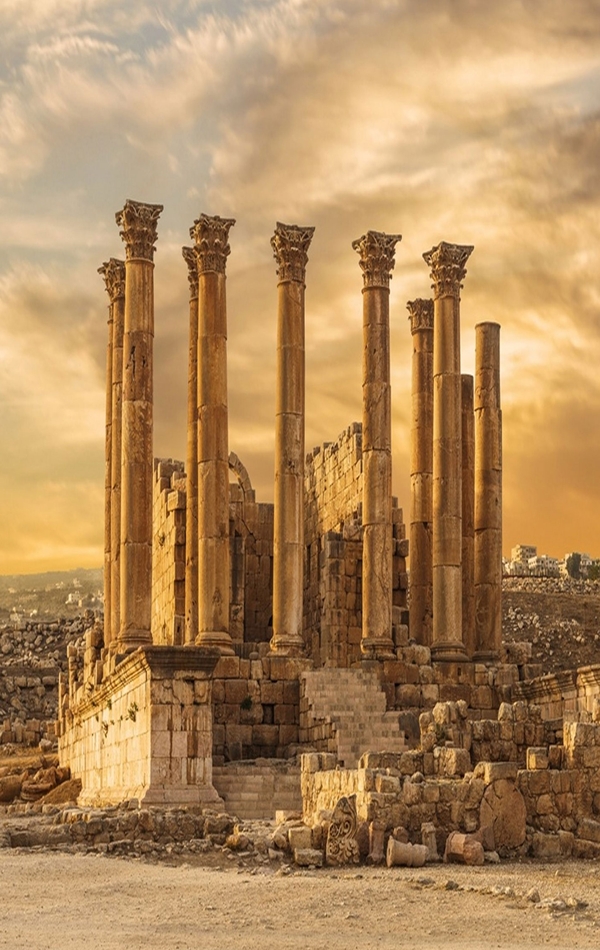
One of the best-preserved examples of Roman urban planning in the Middle East can be found in Jerash. Often called the “Pompeii of the East,” Jerash features impressive colonnaded streets, grand temples, theaters, and public squares that showcase the architectural brilliance of Roman engineering.
Other Roman influences can also be seen across Jordan, including the ancient city of Umm Qais, where visitors can stand among Roman ruins while overlooking the Sea of Galilee and the Golan Heights.
Islamic Heritage and Cultural Continuity
Jordan also holds an important place in Islamic history. The country contains several significant early Islamic sites, reflecting the spread of Islam throughout the region beginning in the 7th century.
Among the most famous examples are the Desert Castles of eastern Jordan, including Qasr Amra, a UNESCO World Heritage Site known for its remarkable frescoes and unique architecture. These structures served as retreats, administrative centers, and meeting places for early Islamic rulers.
The city of Salt, recently recognized as a UNESCO World Heritage Site, also reflects the rich cultural heritage of the late Ottoman period and the harmonious coexistence of different communities.
The Era of the Crusader Castles
During the medieval period, Jordan became a strategic frontier during the Crusader era. To control trade routes and defend territories, massive fortresses were built across the region.
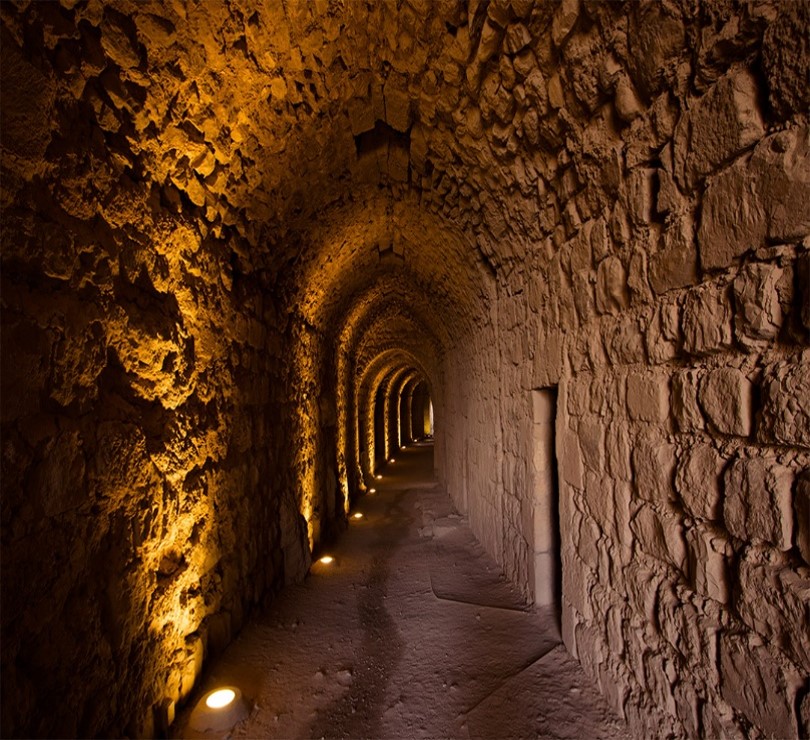
One of the most impressive examples is Kerak Castle, a towering fortress that dominates the surrounding landscape. Its thick stone walls, tunnels, and strategic position illustrate the military importance of the area during the 12th century.
Further south stands Shobak Castle, another Crusader stronghold that offers dramatic views of the surrounding mountains and valleys.
These castles tell the story of a turbulent period when armies, traders, and travelers crossed the same lands that visitors explore today.
A Living History
What makes Jordan truly unique is not only the depth of its history but how seamlessly these civilizations are woven into the modern landscape. Travelers can explore Nabataean tombs in Petra, walk along Roman streets in Jerash, visit early Islamic monuments, and stand inside Crusader castles — all within a single journey across the country.
Jordan’s historical richness offers a rare opportunity to witness the layers of civilization that have shaped the Middle East for thousands of years.
For visitors, every destination reveals a new chapter, making Jordan not just a place to travel, but a place to discover the story of human civilization itself.
Plan a Historical Journey Through Jordan
From ancient kingdoms and Nabataean marvels to Roman cities, Islamic heritage, and Crusader fortresses, Jordan offers travelers an extraordinary journey through the civilizations that shaped the region. Each destination reveals a different chapter of history, inviting visitors to step into the stories that have unfolded across this remarkable land for thousands of years.
Today, exploring Jordan means more than visiting historical landmarks. It is an opportunity to experience a living culture where traditions, hospitality, and heritage remain deeply rooted in everyday life. Whether wandering through the rose-red city of Petra, standing among the columns of Jerash, or overlooking the desert landscapes of Wadi Rum, travellers discover a destination where history continues to inspire every journey.
For a journey shaped around these places, explore our private Jordan tours or contact Quest Travel Jordan for a tailor-made cultural journey.