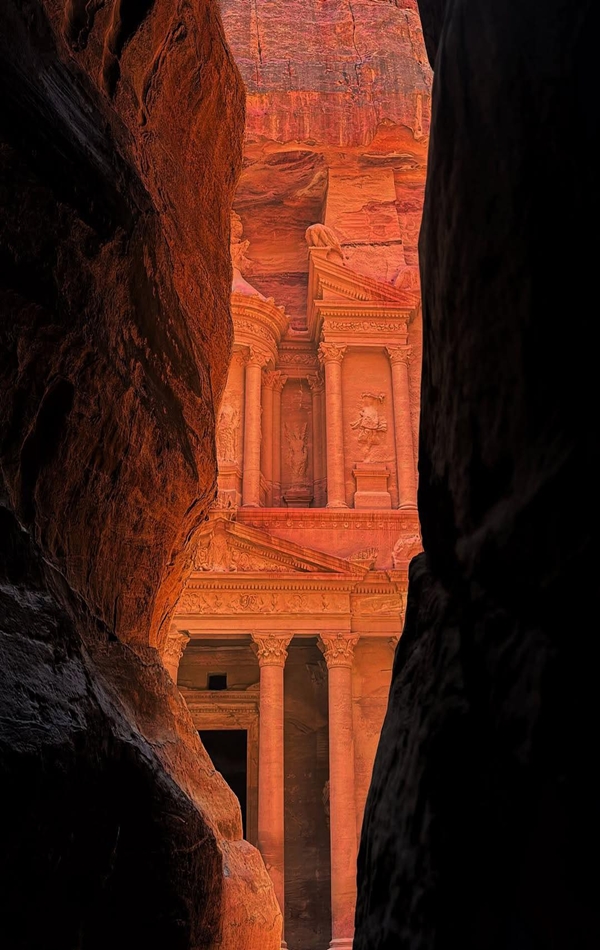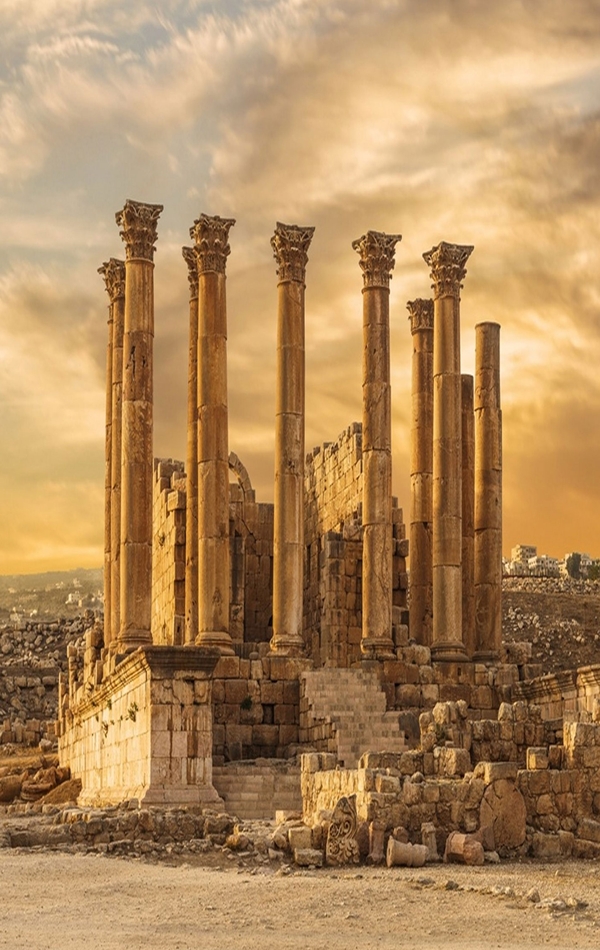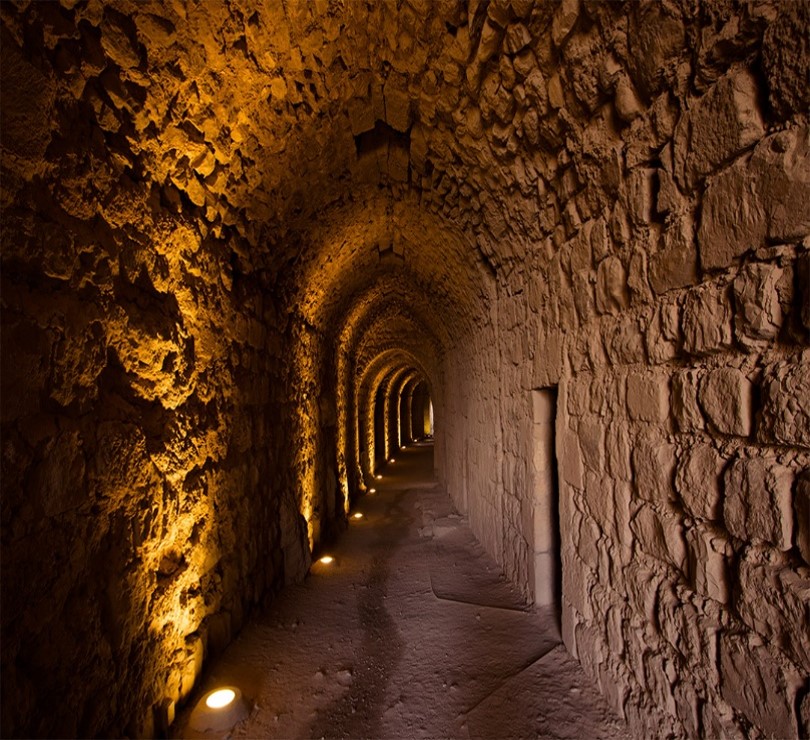



Living heritage in Jordan is not confined to museums or archaeological sites. It is carried in spoken stories, music, dance, craft knowledge, family recipes, coffee rituals and the ways communities understand the land around them. These traditions continue to evolve in homes, workshops, villages and city neighbourhoods, giving modern Jordan a cultural identity that feels both ancient and immediate.
To understand this heritage, it helps to look beyond monuments and notice the knowledge passed from one generation to the next. Jordan’s history provides the wider chronology—explored in Jordan Through the Ages—while living culture reveals how people interpret, preserve and renew that inheritance today.
What Does Living Heritage Mean in Jordan?
Living heritage includes practices, skills and expressions that communities recognise as part of who they are. In Jordan, it can be heard in a poem recited from memory, seen in the movement of a dabke line, felt in the texture of handwoven wool, or shared through the careful preparation of a family dish. The value lies not only in the finished object or performance, but also in the knowledge, relationships and sense of place behind it.
Jordan’s cultural landscape reflects many influences, including Bedouin, village, urban, Circassian, Chechen, Levantine and wider Arab traditions. These identities are not interchangeable, and customs vary by family and region. Approaching them with curiosity—without reducing them to a single image of “authentic Jordan”—creates a more respectful and rewarding understanding of the country.
Oral Traditions, Music and Dance
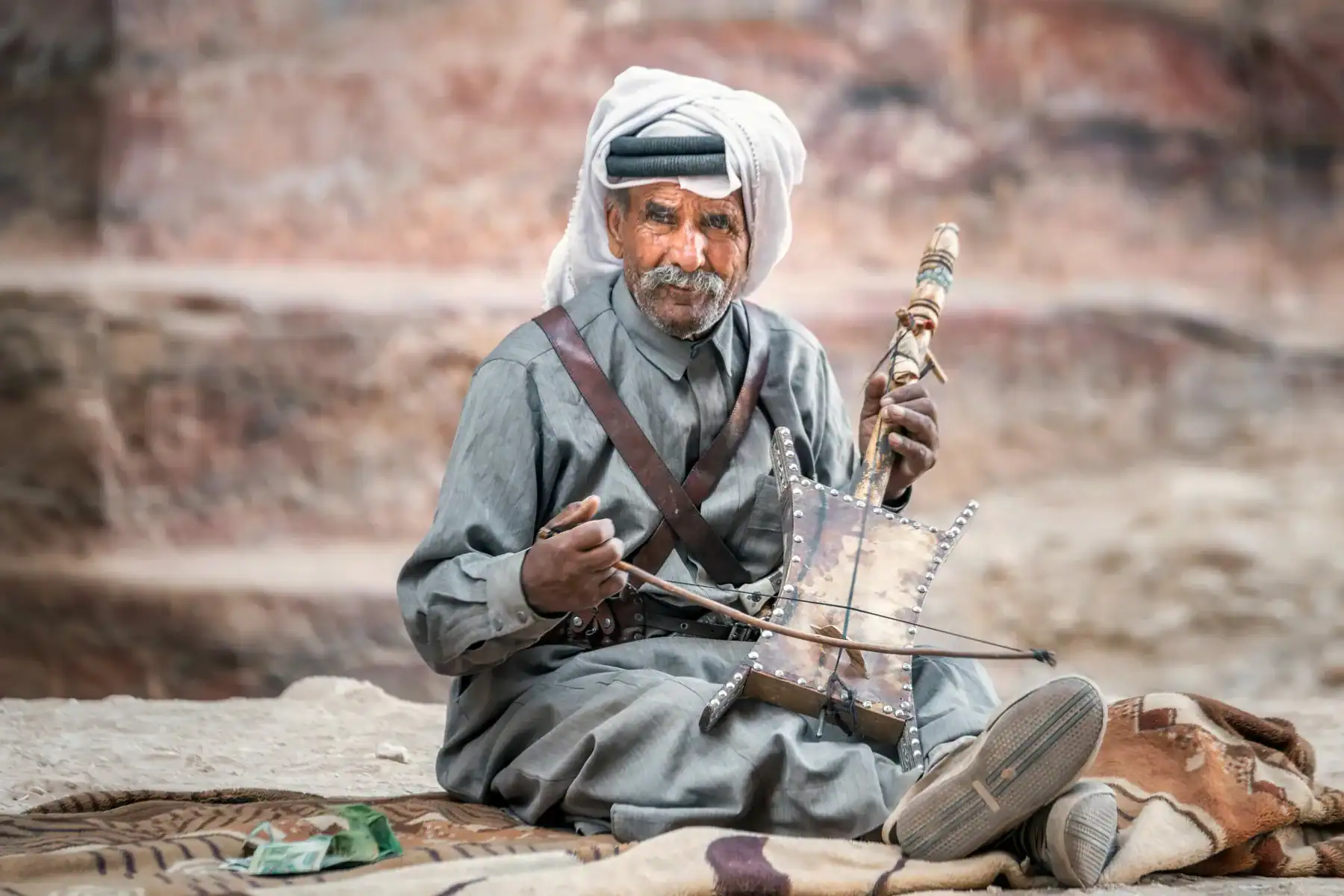
Before histories were written down, knowledge travelled through the spoken word. Poetry, proverbs, songs and family stories preserved memory, social values and practical knowledge. In southern Jordan, oral traditions remain closely connected to desert landscapes, tribal histories and the skills needed to live with limited water and changing seasons.
Music and dance turn shared memory into a communal experience. The rababa, a traditional bowed string instrument, often accompanies poetry and storytelling. Dabke, performed across Jordan and the Levant, brings people together through coordinated steps and rhythm at weddings, festivals and celebrations. Forms, costumes and musical styles differ, so a performance is best understood in its own community context rather than as a fixed national display.


Craft Knowledge Written in Material and Pattern
Jordanian craft traditions hold practical and symbolic knowledge. Weaving, embroidery, basketry, ceramics, silverwork, woodwork and mosaic making connect makers to local materials, inherited techniques and changing markets. A pattern may indicate regional taste or family memory; a woven textile can embody knowledge of fibres, dyes, climate and use.
In Bedouin communities, tent making and weaving historically responded directly to desert life. Wool and hair were prepared, spun and woven into durable textiles, while geometric forms created a distinctive visual language. In Madaba, contemporary mosaic workshops sustain a craft associated with the area’s remarkable ancient floors. Across the country, women’s cooperatives and independent artisans adapt traditional skills for new generations and new uses.
Responsible interest can help sustain this knowledge when visitors ask who made an item, learn about the technique and buy from credible workshops or community enterprises. It is worth allowing time for explanation: the story of a piece and the skill behind it are often more meaningful than a quick souvenir purchase. For wider guidance on protecting landscapes, archaeological sites and local communities, read our responsible travel in Jordan guide.
Foodways: Memory Shared at the Table
Food is one of the clearest ways that living heritage enters everyday life. Recipes are learned by watching and helping; quantities may be judged by touch, texture and experience rather than written measurement. Ingredients and methods reflect landscape, season, agriculture and exchange between communities.

Mansaf is strongly associated with gatherings and major occasions, but Jordan’s food culture is far wider: breads baked for daily use, olives and olive oil, seasonal herbs, preserved foods, lentil dishes, sweets, coffee and tea all carry family and regional associations. The act of serving matters too. Meals establish connection, mark celebration and express care.
Hospitality is important within this story, but it deserves its own focused explanation. For the customs surrounding welcome, coffee and respectful visitor behaviour, read The Warm Hospitality of Jordan.
Knowledge of Land, Water and Place
Living heritage also includes environmental knowledge. Pastoral practices, plant knowledge, navigation, water collection, animal care and seasonal movement developed through long observation of Jordan’s varied landscapes. Such skills show that culture and environment are not separate subjects: each has shaped the other.
UNESCO’s account of the cultural space of the Bedu in Petra and Wadi Rum highlights oral expression, knowledge of flora and fauna, camel husbandry, tent-making, tracking and other practices maintained by communities in southern Jordan. The recognition also underlines a vital principle: heritage should be safeguarded with its bearers, not staged or simplified to meet outside expectations.
Living Culture in Contemporary Jordan
Tradition does not mean that life stands still. Jordanian designers reinterpret embroidery and pattern; chefs present regional ingredients in new settings; musicians combine inherited sounds with contemporary forms; and younger makers use digital platforms to reach wider audiences. This renewal is part of living heritage, provided communities retain agency over how their knowledge is represented and shared.
Amman is especially useful for seeing these layers together. Galleries, cultural centres, workshops, food businesses and neighbourhood markets reveal how local identity changes within a modern capital. Our Amman city guide introduces the city’s character and key places without separating contemporary life from its deeper cultural context.
How to Engage with Jordanian Heritage Respectfully
- Listen before interpreting. Let community members describe a practice in their own words.
- Ask before photographing people. Permission matters, especially in homes, workshops and smaller communities.
- Choose genuine exchange. A thoughtful conversation or craft demonstration has more value than a staged encounter.
- Support local knowledge holders. Buy directly from artisans and credible community enterprises when possible.
- Avoid treating culture as costume. Traditions belong to living communities, not simply to visitor entertainment.
Quest Travel Jordan approaches cultural encounters through private, tailor-made travel rather than scheduled group departures. This allows local context, appropriate pacing and individual interests to shape the experience. Learn more about our approach to private travel for families, friends and organisations.
Frequently Asked Questions
What is living heritage in Jordan?
It is the knowledge, practices and expressions that communities continue to transmit and adapt, including storytelling, music, dance, crafts, foodways, hospitality customs and environmental knowledge.
Where can visitors encounter Jordanian crafts?
Craft knowledge appears in workshops, cooperatives, cultural centres and local markets across the country. Madaba is known for mosaics, while weaving and textile traditions are associated with several rural and Bedouin communities. The maker and community context matter more than a generic label.
Is Jordanian heritage only Bedouin heritage?
No. Bedouin heritage is an important part of Jordan’s identity, but the country also includes village, urban, Circassian, Chechen, Levantine and other cultural traditions. Jordanian identity is layered and diverse.
How can travellers support living heritage?
Choose community-led experiences, ask respectful questions, seek permission for photographs, purchase directly from artisans when possible and avoid encounters that turn complex traditions into stereotypes.
A Heritage That Continues to Grow
The most compelling way to understand Jordanian culture is to see heritage as an active relationship between memory and modern life. A song, a woven pattern, a shared dish or a story tied to a particular landscape can carry generations of knowledge while still finding new meaning today.
By meeting these traditions with attention and respect, visitors gain more than a collection of sights. They encounter the people, skills and ideas that continue to shape Jordan—and help ensure that living heritage remains living.