Step into Jordan, a land where millennia of history unfold alongside warm, modern hospitality. Journey through landscapes rich with iconic wonders — from the majestic rose-red city of Petra and the dramatic desert beauty of Wadi Rum to the buoyant, mineral-rich waters of the Dead Sea.
Beyond these highlights, explore the grandeur of the ancient Roman city of Jerash and experience the vibrant contemporary spirit of Amman. Your journey then leads south to Aqaba on the Red Sea, where time slows amid golden sunshine, crystal-clear waters, and colorful coral reefs. Here, leisurely days invite you to unwind by the sea, enjoy coastal hospitality, or discover the rich marine life that makes the Red Sea one of the world’s most captivating seaside retreats.
Throughout the journey, the genuine warmth of Jordanian culture and the enduring traditions of the Bedouins weave together a tapestry of memorable experiences, creating a journey that is both enriching and unforgettable.
Airport Welcome
Upon arrival at Queen Alia International Airport, guests are welcomed by our meet-and-greet representative, who assists with arrival formalities and luggage.
A Warm Welcome
Hospitality is a way of life in Jordan. Guests are often welcomed with Arabic coffee and dates — a gesture of respect rooted in Bedouin tradition.
Rich Cultural Traditions
You’ll notice a blend of modern life and deep-rooted customs. Traditional dress, local crafts, and daily rituals still play an important role, especially outside major cities.
Family-Centered Society
Family values are central to Jordanian culture. Respect for elders, close-knit communities, and a strong sense of belonging shape everyday life.
Authentic Cuisine
Meals are social and meant to be shared. From the national dish Mansaf to fresh mezze, Jordanian cuisine reflects generosity and tradition.
Religious Harmony
Jordan is a land of peaceful coexistence, home to important Islamic and Christian sites, and known for its respect among different faiths.
Airport Welcome
Upon arrival at Queen Alia International Airport, guests will be welcomed with our Meet & Assist service, ensuring a smooth and expedited arrival experience. Our dedicated representative will assist with immigration and arrival formalities, baggage collection, and escort guests through the airport before leading them to their private vehicle.
Hotel Transfer
A comfortable transfer will follow to the hotel in Amman for check-in, with free time to relax and freshen up after the journey.
Evening
Overnight accommodation at the hotel in Amman.
Breakfast
Breakfast at the hotel in Amman.
Walking Tour of Amman
Begin the day with a visit to the Amman Citadel, home to key archaeological remains including the Temple of Hercules, the Umayyad Palace, a Byzantine church, and the National Archaeological Museum, offering sweeping views and insight into the city’s layered history.
Continue to downtown Amman to explore the iconic Roman Theatre, a vast 2nd-century amphitheatre carved into the hillside and still used for cultural events today, followed by the nearby Nymphaeum, a Roman-era public fountain that reflects the grandeur of ancient Philadelphia.
Stroll through the lively streets and traditional markets of the old city, ending with street-food tastings such as crispy falafel and sweet kunafeh — capturing the authentic flavors and everyday life of Amman.
As-Salt City Tour
Continue to the historic town of As-Salt for a cultural journey into Jordan’s living heritage. Once one of the country’s most important commercial centers, As-Salt is renowned for its elegant yellow-stone architecture, hillside setting, and long traditions of hospitality and coexistence.
The experience begins with a guided walk through the Old Town, where narrow streets are lined with beautifully preserved Ottoman-era houses and historic landmarks. The visit includes key heritage houses and museums such as Abu Jaber House and the As-Salt Museum, offering meaningful insight into local history, architecture, and social life.
The tour then continues along Hammamat Street, the vibrant heart of the city, where traditional shops sell spices, jewelry, household goods, freshly baked bread, fruits, and vegetables — creating a genuine sense of everyday life in As-Salt.
The visit concludes with time at a panoramic viewpoint or a local café, where guests can enjoy Arabic coffee while taking in sweeping views over the surrounding hills.
Evening
Return to Amman in the late afternoon and transfer back to your hotel to relax and unwind after a day rich in history, culture, and scenic beauty.
Breakfast
Breakfast at the hotel in Amman. After breakfast, depart from Amman for a full-day journey across Jordan’s eastern desert landscapes, uncovering remarkable sites that trace Umayyad, Roman, Nabataean, and early Christian history.
Qasr Amra (UNESCO World Heritage Site)
One of the finest surviving examples of early Islamic art and leisure architecture, Qasr Amra was built in the early 8th century as a desert retreat. Inside, remarkably preserved frescoes portray hunting scenes, bathing rituals, musicians, zodiac signs, and depictions of contemporary rulers — offering rare insight into Umayyad life, science, and artistic expression. The visit includes the audience hall and bath complex, where the caldarium, tepidarium, and frigidarium reveal the sophistication of early desert architecture.
Qasr Kharana
Rising dramatically from the open desert, Qasr Kharana is a monumental fortress-like structure believed to have served as a caravan meeting point or administrative hub. Its symmetrical layout, central courtyard, vaulted chambers, and defensive appearance reflect the architectural ingenuity of the Umayyad era. From the rooftop, enjoy sweeping views across the surrounding desert while learning about ancient travel routes and life along the region’s historic trade corridors.
Azraq Castle
Constructed entirely of black basalt stone, Azraq Castle guarded key trade and pilgrimage routes for centuries. Originally built by the Romans and later expanded by Islamic dynasties, the fortress gained modern historical significance as the headquarters of T.E. Lawrence during the Arab Revolt. Visitors explore massive stone doors, courtyards, towers, and barracks while discovering the site’s strategic role in desert defense and regional trade.
Umm Al-Jimal
The journey concludes with a visit to Umm Al-Jimal, an extraordinary ancient settlement built almost entirely from volcanic basalt. Once a Nabataean town that flourished under Roman and Byzantine rule, the site features remarkably preserved houses, churches, streets, reservoirs, and watchtowers. Walking through the ruins offers a powerful sense of daily life on Jordan’s northern frontier and showcases one of the most impressive examples of basalt architecture in the region.
Evening
Return to Amman for overnight at the hotel.
Breakfast
Breakfast at the hotel in Amman.
Um Qais
Depart from Amman in the morning and begin your journey north toward Um Qais (Gadara), one of the most breathtaking archaeological settings in Jordan. Perched dramatically on a hilltop, Um Qais overlooks a sweeping landscape that includes the Jordan Valley, the Sea of Galilee, and the distant Golan Heights.
Stroll through its impressive Roman and Byzantine remains — basalt-built theatres, colonnaded streets, ancient gates, and early Christian church structures. As you explore, enjoy the refreshing breeze and panoramic views that make this site both historically rich and naturally stunning.
Ajloun
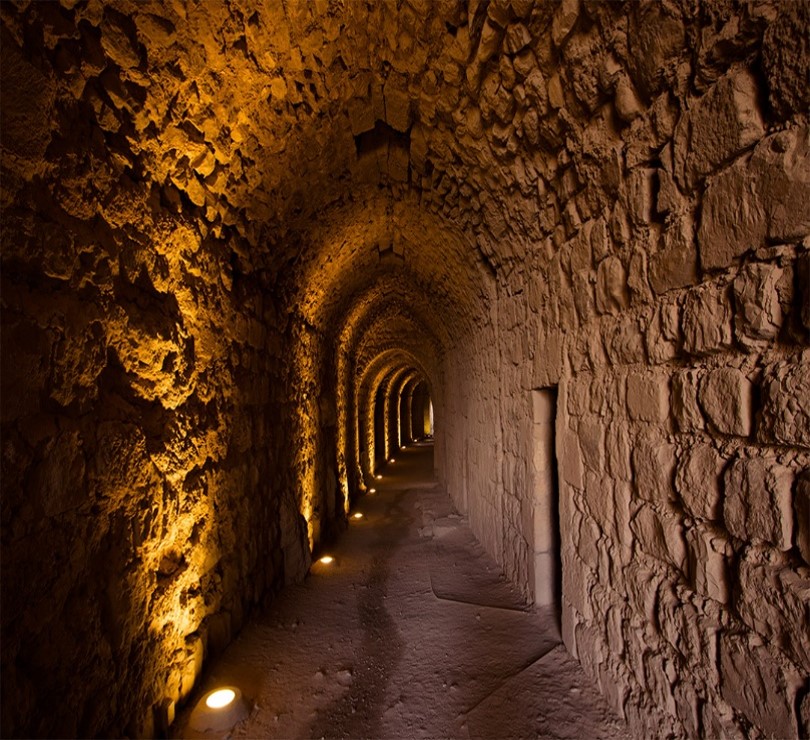
Continue your journey through the lush highlands of northern Jordan to reach Ajloun, home to the remarkable Ajloun Castle — a formidable 12th-century fortress constructed by the armies of Saladin during the battles against the Crusaders.
Wander through its thick stone corridors, defensive towers, vaulted halls, and hidden passageways. From the upper terraces, admire dramatic views stretching across rolling hills, evergreen forests, and traditional mountain villages.
Jerash
Continue to the magnificent ancient city of Jerash, one of the most complete and best-preserved Roman provincial cities in the world. Enter through Hadrian’s Arch and step into a city frozen in time.
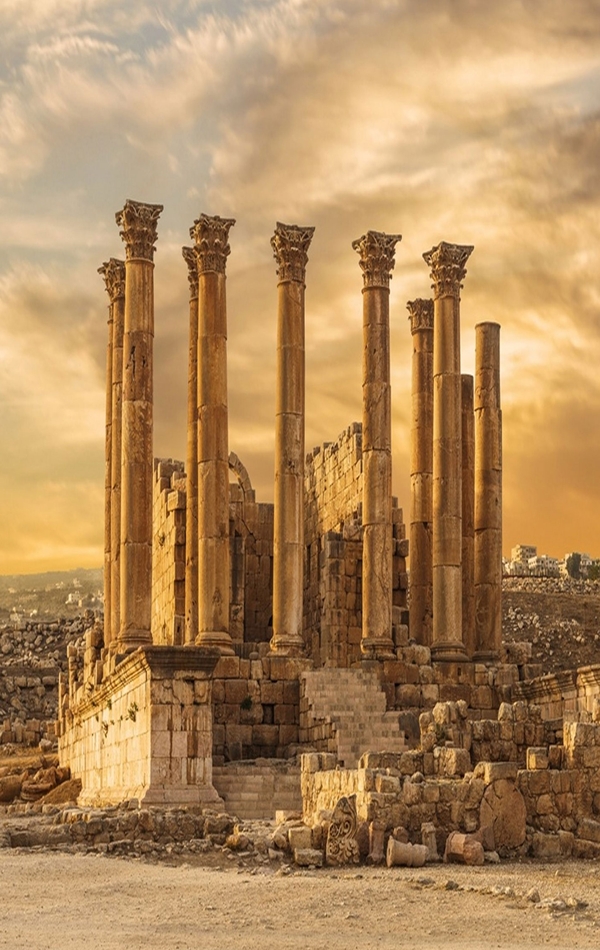
Walk along the Cardo, the main colonnaded street paved with original Roman stones, and visit monumental landmarks including the Oval Plaza, the Nymphaeum, the Temple of Artemis, and the South Theatre, where the remarkable Roman acoustics still impress visitors today.
Jerash offers an exceptional glimpse into daily life in the ancient Decapolis, with temples, plazas, fountains, and public buildings remarkably preserved.
Evening
After completing your exploration of Jerash, return to Amman in the late afternoon and transfer back to your hotel to relax and unwind after a day rich in history, culture, and scenic beauty.
Breakfast
Breakfast at the hotel in Amman.
Mount Nebo & Madaba (St. George Church)
After breakfast, depart from your hotel in Amman and drive south toward Mount Nebo, the biblical site believed to be where Prophet Moses stood to view the Promised Land.
From its elevated viewpoint, enjoy sweeping panoramas over the Jordan Valley, the Dead Sea, and on clear days even as far as Jerusalem.
Continue to the nearby town of Madaba, known as the “City of Mosaics.” Visit the famous St. George Church, home to the 6th-century mosaic map of the Holy Land — the oldest known geographic floor mosaic in existence.
You may also explore additional mosaic workshops or optional churches and archaeological parks depending on time and interest.
Dead Sea
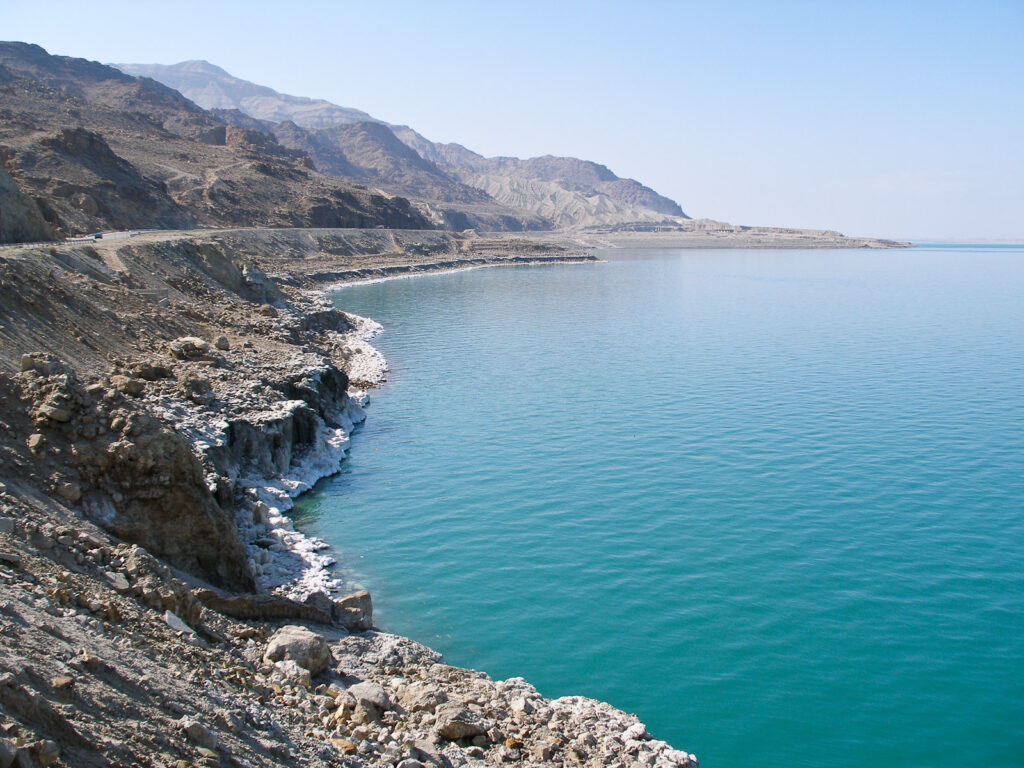
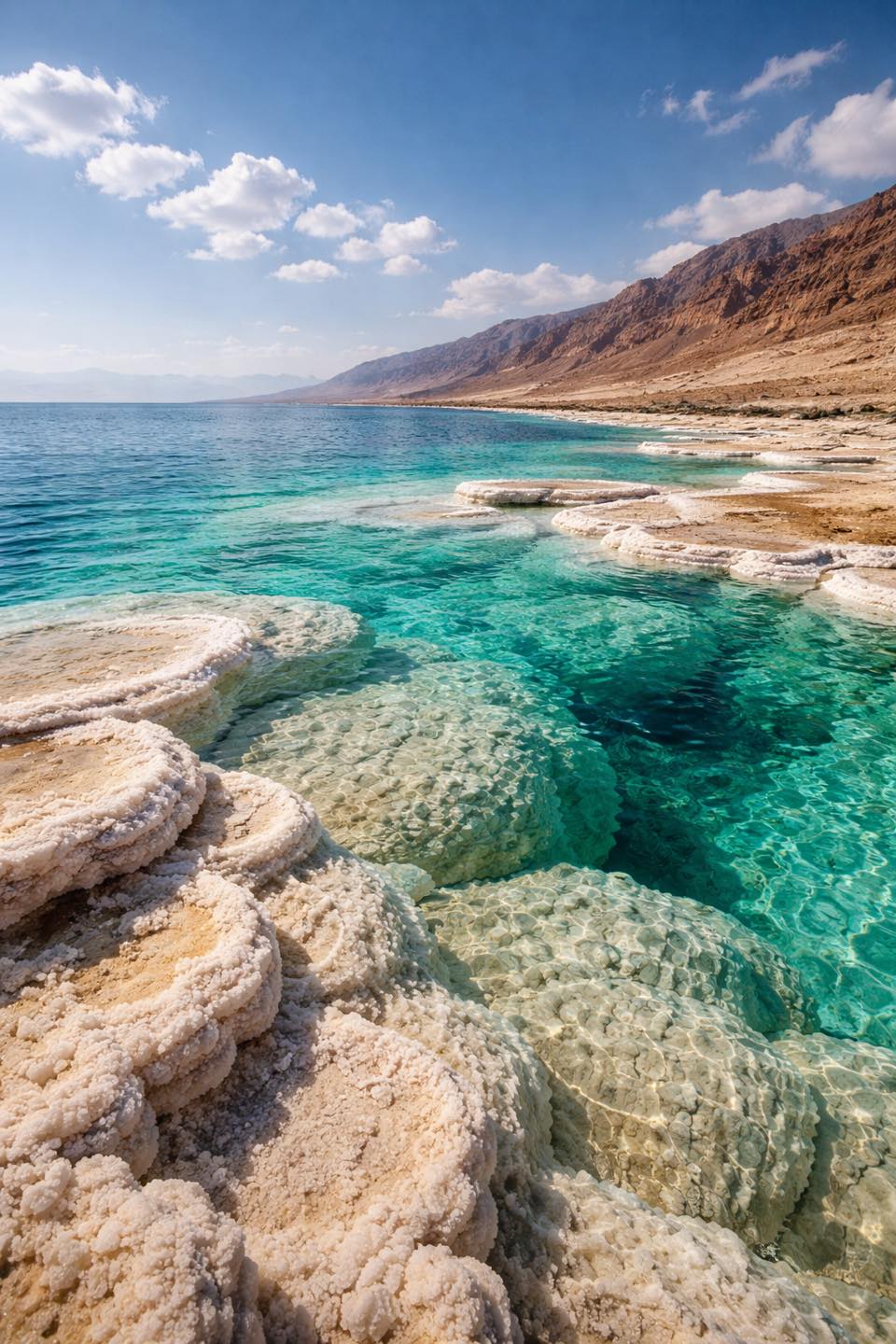
Proceed further toward the Dead Sea, the lowest point on earth. Upon arrival, enjoy free time to float in its mineral-rich waters and experience the unique sensation of effortless buoyancy. You may also relax on the beach, apply the natural black mud, or simply enjoy the serene views across the water.
Evening
Overnight at the hotel at the Dead Sea.
Breakfast
Breakfast at the hotel at the Dead Sea.
Enjoy a free morning at leisure to relax and experience the hotel’s facilities. Guests may choose to unwind by the pool, float in the mineral-rich waters of the Dead Sea, or simply take in the peaceful desert surroundings at their own pace before continuing with the day’s program.
Shobak Castle
Later, travel south along the historic King’s Highway to visit Shobak Castle, also known as Montreal — a dramatic 12th-century Crusader fortress perched on a hilltop overlooking the rugged landscapes of southern Jordan. Built by King Baldwin I, the castle once played a strategic role in controlling important trade routes and withstood numerous sieges throughout its history.
Today, visitors can explore its surviving towers, hidden passageways, and ancient inscriptions while enjoying sweeping views of the surrounding valleys and desert landscapes. Although less visited than other Crusader sites, Shobak offers a quiet and atmospheric experience that highlights Jordan’s rich medieval heritage and the enduring legacy of the Crusader era.
By late afternoon, continue the drive to Petra, check in at your hotel, and enjoy the evening at leisure in preparation for the next day’s exploration of the legendary Rose-Red City.
Breakfast
Breakfast at the hotel in Petra.
Today is fully dedicated to discovering Petra – the legendary Rose-Red City, carved by the Nabataeans over 2,000 years ago and honored as one of the New Seven Wonders of the World.
Begin your visit with a leisurely walk or optional horse ride to the entrance of the Siq, the dramatic natural gorge that leads into the hidden city.
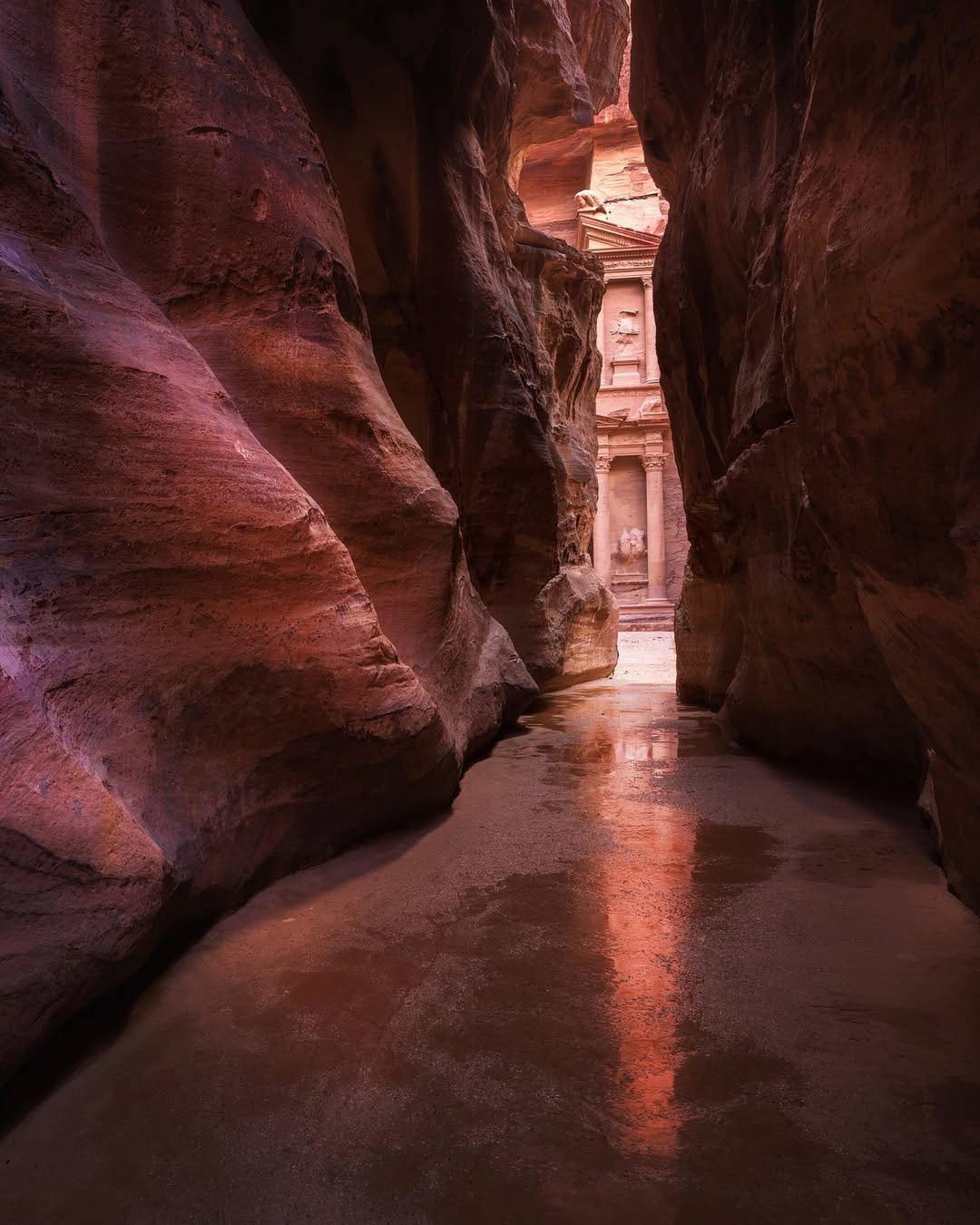
This narrow passage, flanked by cliffs reaching up to 80 meters high, winds gently for more than a kilometer. As you move through its twisting pathway, admire the ancient water channels, niches, and stone carvings that reveal the Nabataeans’ remarkable engineering and artistic skill.
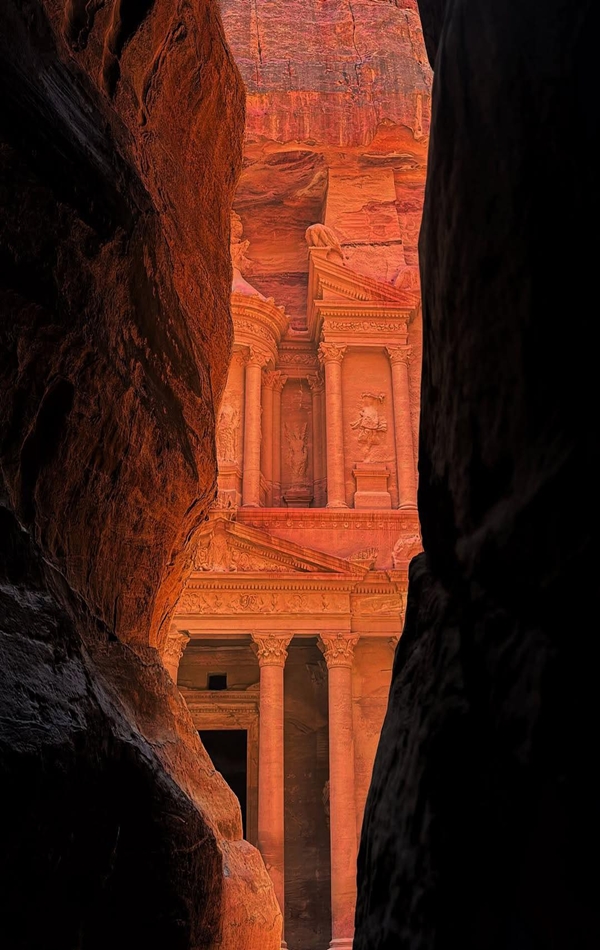
The changing colors of the sandstone — ranging from pink to red to gold — create an atmosphere of anticipation until the Siq suddenly opens to unveil one of the most iconic monuments in the world: the Treasury (Al-Khazneh). Carved with extraordinary precision into the rock face, its façade stands as a masterpiece of Hellenistic influence blended with Nabataean craftsmanship.
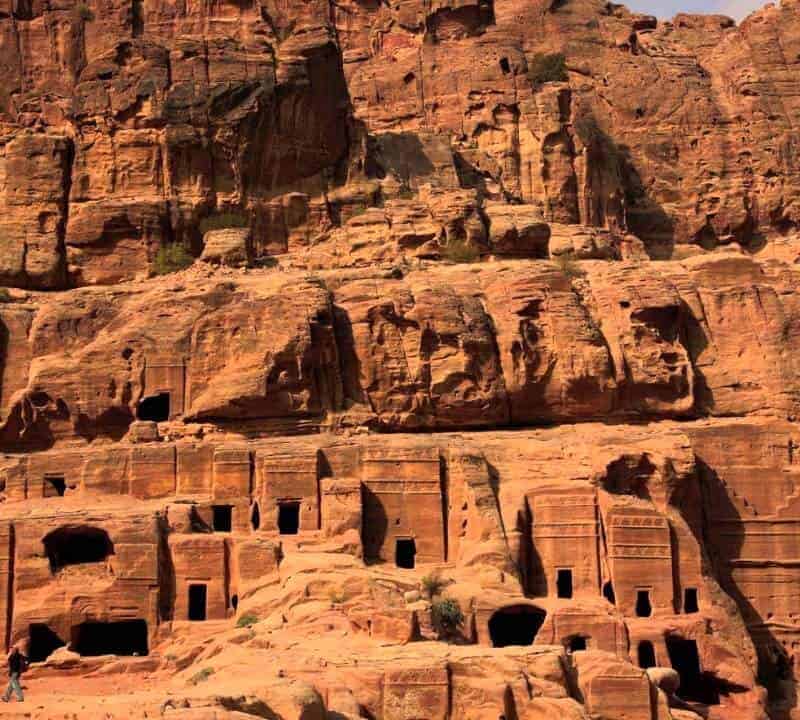
From the Treasury, continue deeper into Petra to explore its vast archaeological treasures. Walk along the Street of Facades, lined with hundreds of carved tombs and ancient dwellings, then visit the impressive Theatre, cut entirely into the mountainside and capable of seating thousands during its prime.
Continue your journey through the expansive Colonnaded Street, once the commercial heart of Petra, and admire nearby temples, marketplaces, and the ruins of the Great Temple — each reflecting the prosperity and sophistication of this ancient trading empire.
For those seeking a more immersive experience, optional hikes are available. You may ascend to the High Place of Sacrifice, following ancient Nabataean stairways to a mountaintop altar offering sweeping views over Petra’s valleys, or journey to the legendary Monastery (Ad-Deir), one of Petra’s largest and most breathtaking monuments set against a backdrop of rugged desert mountains.
After completing your exploration of this extraordinary city, make your way back through the Siq and exit the site.
Return to your hotel in Petra for overnight, carrying with you memories of one of the most remarkable archaeological sites on earth and a deeper appreciation of the Nabataean civilization.
Breakfast
Breakfast at the hotel in Petra.
Little Petra (Siq al-Barid)
Your first stop is Little Petra, also known as Siq al-Barid, a hidden gem located just a few kilometers north of Petra. This smaller and quieter Nabataean site offers a serene introduction to the history and architecture of the region. Wander through its narrow passageways and admire the rock-cut façades and the Painted House — an ancient Nabataean residence decorated with beautifully preserved frescoes featuring geometric and floral motifs.
Continue to nearby Beidha, an archaeological treasure that preserves evidence of one of the earliest known human settlements in the region. Walking among the ruins, visitors can observe the remains of circular stone houses and ancient tools that reveal the ingenuity of Neolithic communities that lived here thousands of years ago.
Wadi Rum Exploration
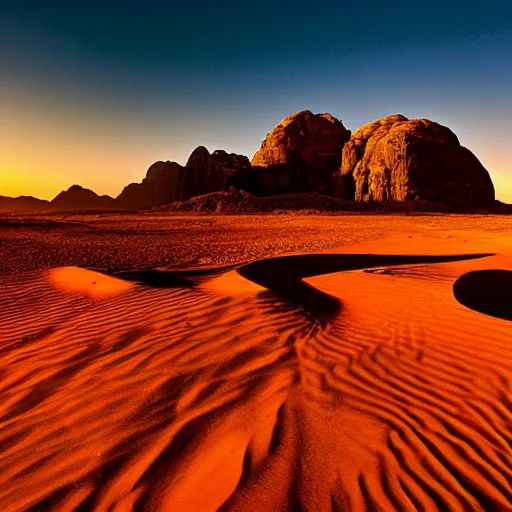
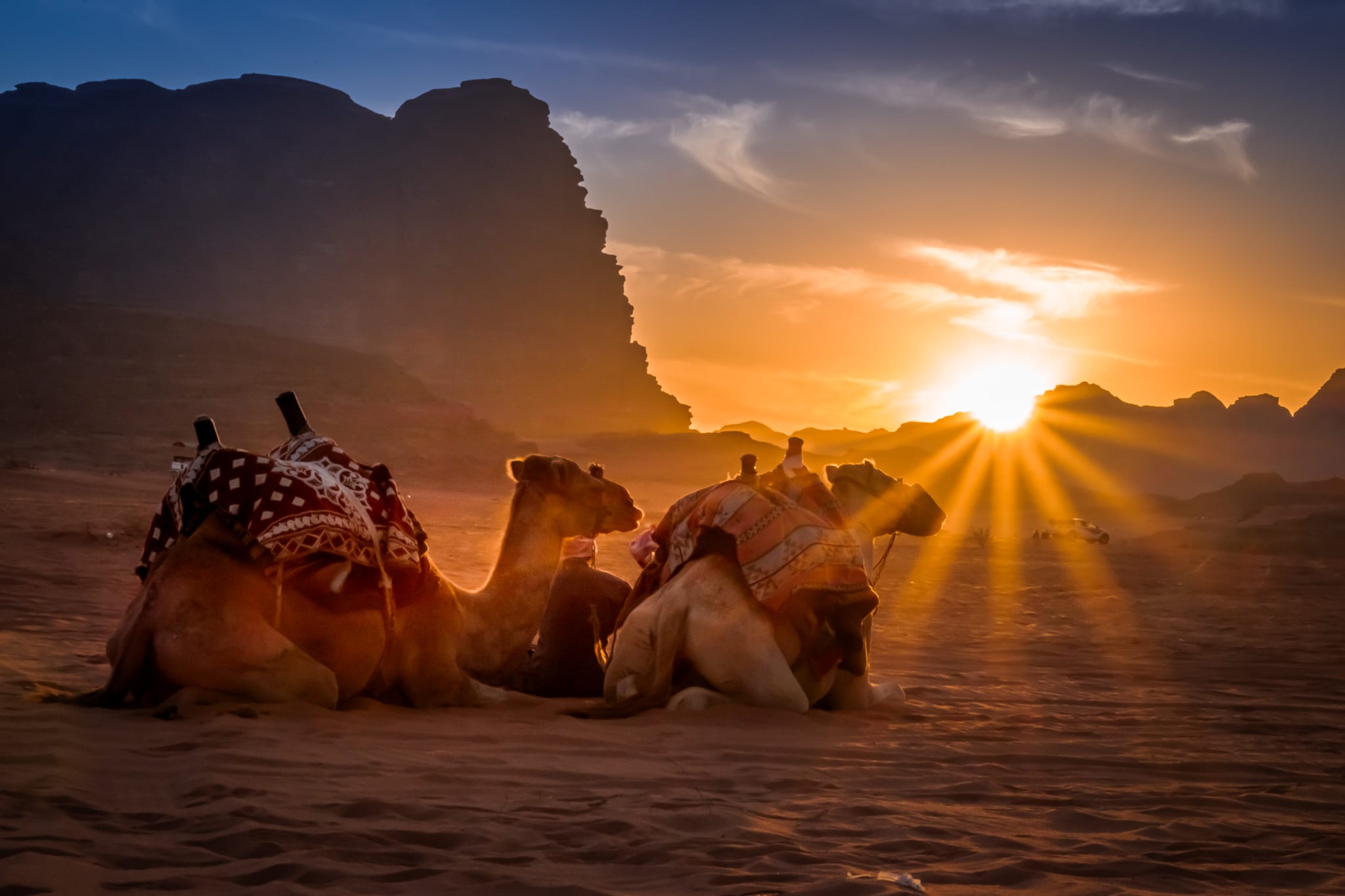
Continue south to Wadi Rum, also known as the “Valley of the Moon,” the largest desert in Jordan and a UNESCO World Heritage Site. This extraordinary landscape of towering sandstone mountains, vast red dunes, and dramatic desert valleys has served as the backdrop for famous films such as The Martian, Lawrence of Arabia, and Aladdin.
Enjoy a three-hour jeep tour across the spectacular desert terrain. Accompanied by a local Bedouin guide, travel through sweeping valleys and across red sand dunes while discovering some of Wadi Rum’s most iconic natural landmarks.
Typical stops include Lawrence’s Spring, Khazali Canyon with its ancient inscriptions and petroglyphs, dramatic sand dunes, natural rock bridges such as Um Frouth, and the ruins of Lawrence’s House — all surrounded by the surreal, Mars-like landscapes that make Wadi Rum one of the most extraordinary deserts in the world.
Evening
Enjoy a peaceful evening at your desert camp in Wadi Rum, with dinner and overnight under the stars.
Wake up early in the stillness of the desert to witness the sunrise over Wadi Rum, as the first light gently paints the sandstone mountains and golden dunes — a peaceful and unforgettable start to the day. After enjoying the morning view from your camp, head for breakfast in the desert before checking out.
Aqaba
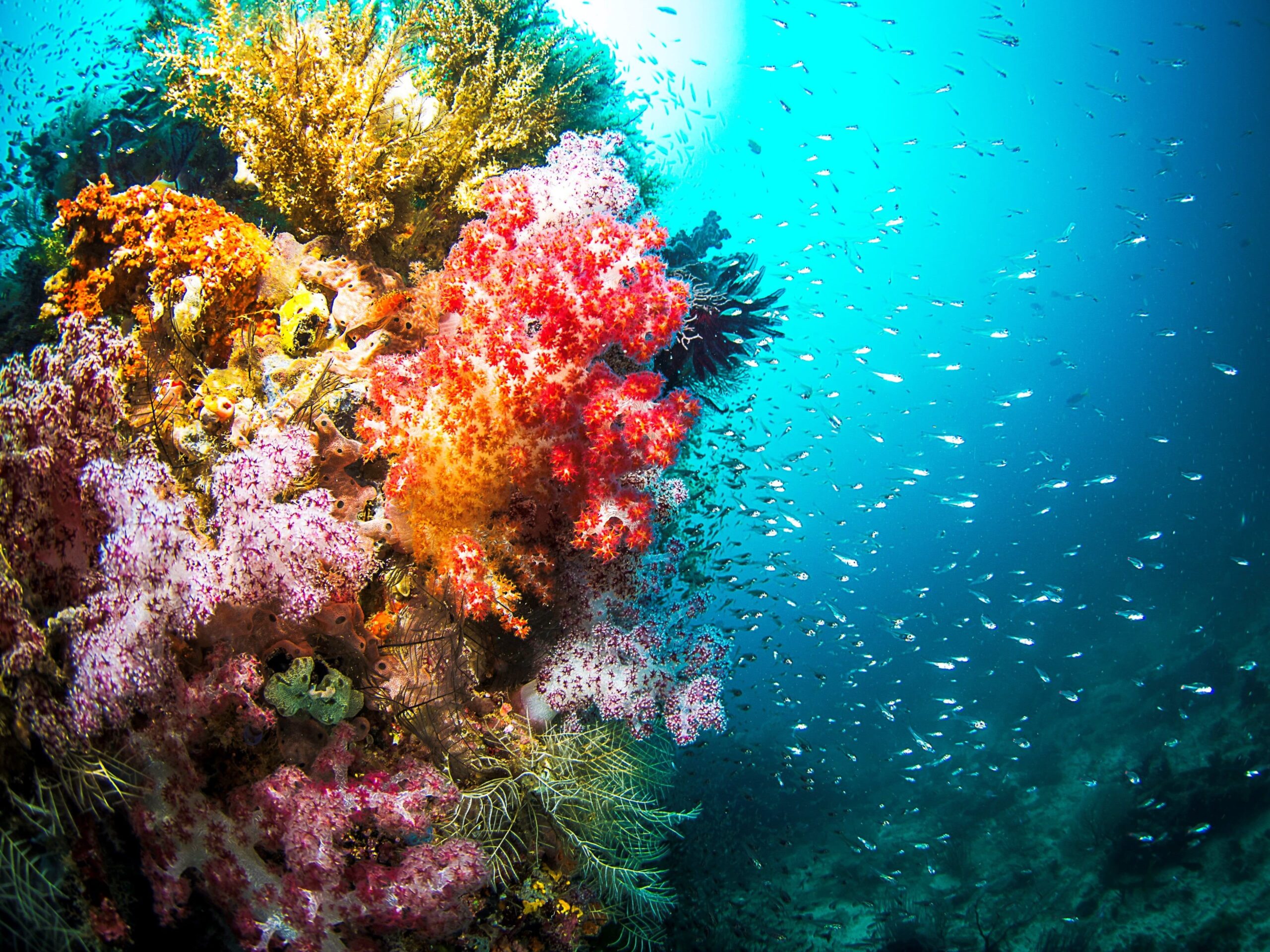
Drive south toward Aqaba, located on the shores of the Red Sea and known as Jordan’s premier seaside destination. Aqaba offers a perfect combination of relaxation, marine adventure, and warm coastal ambiance. Its crystal-clear waters and some of the most accessible coral reefs in the region make it a paradise for snorkeling and diving enthusiasts, with opportunities to discover colorful marine life, coral gardens, and historic shipwrecks just a few meters from the shore.
Travelers can enjoy a variety of water activities, including sunset cruises, glass-bottom boat tours, jet skiing, and sailing. Those seeking a more tranquil experience can relax on pristine beaches or unwind at waterfront resorts equipped with pools, spas, and private beaches.
Beyond the coastline, Aqaba offers a taste of local culture and heritage through its historic fort, the remains of ancient Ayla, bustling markets, and charming seafood restaurants along the marina. The city’s relaxed atmosphere and mild climate make it an enjoyable destination year-round.
Whether travelers are seeking leisure, family-friendly activities, or underwater exploration, Aqaba delivers an enticing mix of comfort, adventure, and Red Sea hospitality — making it an ideal conclusion to a journey through Jordan.
Evening
Overnight at the hotel in Aqaba.
Airport Departure
At the scheduled time, transfer from your hotel in Aqaba to Aqaba International Airport for departure. Enjoy a comfortable drive with professional assistance, ensuring a smooth and timely conclusion to your journey.

This tour includes transportation during the itinerary, guided activities, accommodation as mentioned in the program, and all experiences listed. Meals and additional services are included where specified in the itinerary.
This tour is suitable for travelers with a moderate level of fitness. Some activities include walking and light hiking. Guests should be comfortable with outdoor activities in varying terrain.
We recommend comfortable walking shoes, sun protection (hat and sunscreen), a reusable water bottle, light layers of clothing, and any personal medications you may need.
Meals are included as outlined in the itinerary. Some meals may be at local restaurants or hosted by local communities, offering an authentic regional experience.
Absolutely. At Quest Travel Jordan, all journeys can be tailored — from hotel category upgrades, culinary experiences, hiking options in Dana, balloon rides in Wadi Rum, or private dining in Petra.
Spring (March–May) and Autumn (September–November) offer ideal weather. However, Jordan is a year-round destination.
Yes. The itinerary is well balanced between cultural visits, light walking experiences, and relaxation. Petra and Dana involve moderate walking, but routes can be adjusted based on guests’ preferences.




At Quest Travel Jordan - DMC, we believe every journey should be meaningful and unforgettable. From tailor-made private journeys and luxury travel to FIT, groups and MICE programmes, our Jordan-based team delivers seamless planning, trusted local expertise and authentic experiences across the Kingdom.